















Colour temperature
Today we will talk about different types of light, such as warm light and cool light, yellow light and white light, about the way they light a space and how this affects the atmosphere.
So let’s shed a little light on the confusion and understand everything you need to know about terms such as cool white light, the K in the colour temperature term 3000K, and more…
What are the differences between colour temperatures?
The colour of light, or in professional terms “colour temperature”, directly affects the atmosphere in the space it lights.
To create the right atmosphere, each space needs light of a different shade.
In recent years a good deal of time has been devoted to the question of which colour temperature best suits a space.
Most people prefer “warm white” light, which we have been used to since Thomas Edison’s invention of the light bulb in 1879.
In fact, we have long been used to lighting whose colour recalls the colour of fire, which we define as ‘normal light’, and to low lighting, which is called “fluorescent light”.
For the description “warm” imitates the colour of fire, which we used as a light source for thousands of years, and the description “cool” imitates the colour of the daytime sky.

Cool white is usually the preferred colour for work areas and offices, and today it is also used in areas where blue/white light is preferred.
Although different suppliers and manufacturers tend to describe the colour of light in different ways, the best indication of the colour of light you will get from the lamp you buy is the colour temperature marked on the pack itself.
Thus:
- “Natural white” light equals 4000K
- “Warm white” light is often described as being in the range of 2700K – 3000K
- And “cool white” light colours are marked at around 6000K and above.
Why is the “colour temperature” of light sources measured in kelvin (symbol: K), and why does it matter?
In the past, when the lamps available were ordinary incandescent lamps and all came in one standard colour of “warm white” (2700K), colour temperature did not matter so much to us.
Today, by contrast, new technologies give us a wide choice of shades.
It is therefore important to choose the right colour shade to get the look you want.
And, as one would expect, different colour temperatures are used for different lighting purposes and/or applications.
Choosing the right light colour is not complicated.
It is simply a matter of understanding the different colour shades available to us, so that we can match the right lamp to the right application.

For help from a lighting consultant in matching the colour temperature to the space you have in mind, call 054-5538204
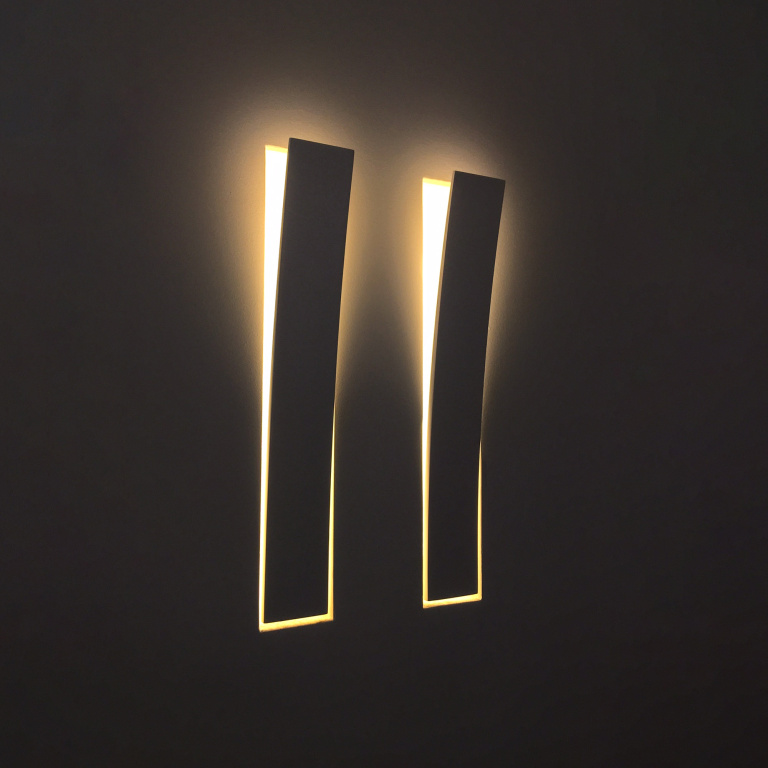
2700K warm white
This white gives a yellowish light that helps enrich the warm colours in the home, such as wood.
These shades are better suited to homes, apartments, restaurants, hotels, guest cottages and more – areas where people relax.
3000K warm white
This white gives a yellowish light that helps enrich the warm colours in the home, such as wood.
They are better suited to retail, fashion shops, ceramics, furniture, cafés and more – areas where you want a warm shade but with a slightly more natural, rich colour.
Natural white 4000K
“Natural white” is a colour temperature similar to that of fluorescent lamps.
In fact, “natural white” gives off a bluish light that improves our ability to see contrasts, which makes it ideal for work areas such as:
kitchens, jewellery shops, offices, hospitals (not to mention that it is excellent for reading lamps).
“Cool white” daylight 6000K and above
Daylight lamps tend to look cooler or bluer than lamps with a ‘normal’ shade, and are usually used for special applications only.
Intended mainly as industrial lighting for factories, industry, logistics warehouses and street lighting.
What is the colour temperature scale of light?
The options from ‘warm’ to ‘cool’ are usually classified in the following steps:
- 2700K (the warmest).
- 3000K.
- 3500K.
- 4000K.
- 5000K.
- 6000K and above (the coolest).
