When we move into a new apartment, we invest a lot in its design so that we feel at home.
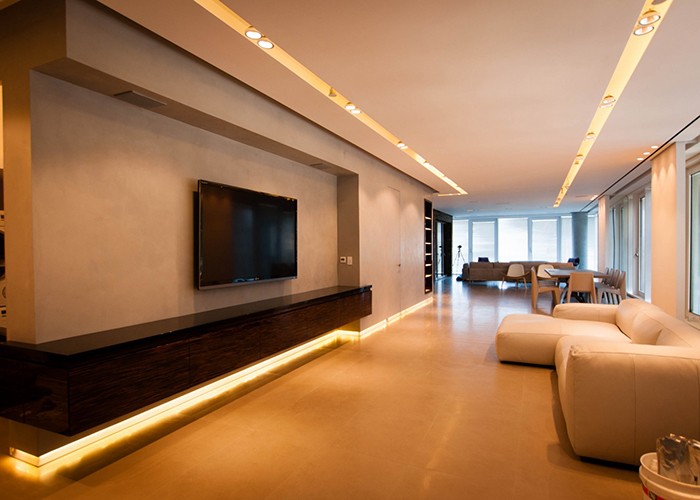
Part of the investment focuses on the lighting of the spaces, to create a warm atmosphere or, alternatively, a feeling of natural light. But what about the garden?
It is very important to create the right atmosphere in the outdoor parts of the home as well, so that we can enjoy spending time in them.
Outdoor lighting can create different kinds of atmosphere, also after dark, and in this way make the garden the centre of activity in the home, at any hour.
Planning and thinking are the key
The most important stage is planning ahead based on our needs.
Do we want the outdoor space to become a gathering place for the whole family, or a place with a purely decorative statement?
Are there places in the garden we want to highlight, or that it is important to us to have lit, as opposed to others?
Installing certain light fixtures requires advance preparation and work on the electrical system.
Lighting helps us hide certain areas and highlight others, so it is directly linked to the design of the outdoor area and to thinking about needs.
If you don’t tend to spend much time outside, there is no point investing in several light sources; invest instead in lighting that floods the area constantly in the functional zones such as parking, entrance, exit and seating area.
It is also important to plan how many switches we want, where they will be, whether manual or automatic, and so on.
There is low-voltage lighting called 12V, whose clear advantage is the lower risk of electric shock, so the danger from wetness caused by sprinklers, dew or weather is significantly reduced.
It is also easy to install, suits a wide range of light fixtures and is economical, unlike high-voltage lighting, which requires installation by a professional and is less economical; in your garden lighting, too, any outdoor lighting solution will do a great job.
If you also devote a little planning and thought to it, or consult professionals who can do the planning for you, you can get much more out of your garden.
What should you keep in mind when planning garden lighting?
- Light colour and intensity – While the colour of the light is a matter of personal preference, it is worth also taking into account the dominant colours of the plants in the garden.
You should also consider the light intensity, which should be enough to get around the garden, while being at the right level to create a pleasant atmosphere that is not too intense.
When planning the light intensity, take into account the total number of light fixtures in the garden and the overall light they will give together.
- Garden area – At least the greater part of the garden should be lit, and the preference is always to light the entire area.
- Costs – Garden lighting solutions are many and varied, and the price range is quite wide too.
There are plenty of opportunities to cut costs with economical LED bulbs, small light fixtures and by giving up large, massive designs or fixtures.
At the same time, those who want to invest in lighting posts and smart solutions can do so without spending a lot of money..
- Light fixtures – When choosing light fixtures for the garden, it is important to keep a balance between the different fixtures.
They do not have to be uniform, but there should be a flow, also in relation to the look of the garden itself, its plants and the other elements in it.
Which types of light fixtures should we use to light our outdoor area or garden?
There are different categories of outdoor lighting.
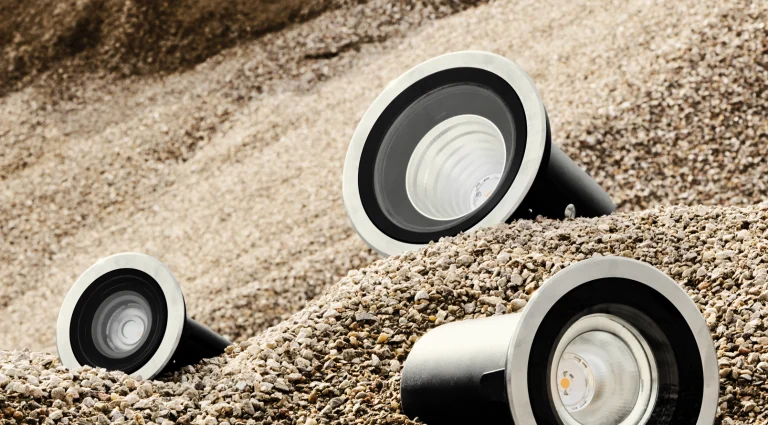
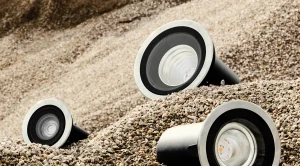
There is decorative lighting, whose aim is to highlight plants through a play of light and shadow, for the sake of beauty, through dramatic effects and original placements such as lighting recessed in the ground, mushroom lights used to light plants from above, spotlights, light extensions placed close to the plant and more.
There is building lighting, whose aim is to highlight the beauty and the architectural structure of the building from outside.
With beams of light aimed at the building from the outside area, certain parts can be highlighted.
Another type is floodlighting, whose aim is to light certain parts of the yard evenly, such as a dining area, a play area and so on.
Finally, there is orientation lighting, whose aim is to help those present find their way around the area in the hours of darkness.
It is usually integrated into paths and areas of passage, entry and exit. These light fixtures will usually be recessed into the ground or the wall along the paths.
5 tips and important points
- The quality of the materials – the light fixtures, the bulbs and the conductors – is extremely important, especially in open areas exposed to the weather and humidity.
Check that the materials are resistant to the conditions in which you will use them, mainly to avoid unnecessary expenses further down the line.
- Outdoor lighting stays on for a long time, so it is recommended to use economical bulbs such as the LED bulb.
It is economical in electricity consumption, shatter-resistant, conducts light and not electricity, and so can be used in damp areas, and it gives off hardly any heat.
- The lighting depends on the accessibility of the electrical system in the areas outside the house. The outdoor electrical system is usually buried in the ground.
So it is important to plan the lighting before planting, and also to hide the electrical cabinet for safety reasons and so that the weather does not damage it.
- Recessed lighting in exterior walls requires early preparation, since concrete casting and additional work are needed.
- When installing lighting systems, it is recommended to use many weak sources rather than a few strong light fixtures, so that you can enjoy the ability to light certain areas and not others, and save on electricity consumption.
Advantages and disadvantages?
Using lighting when designing the garden brings various advantages and disadvantages that stem from a range of areas.
First of all, these are design choices spread over a wide price range, so a lit garden need not be a financial burden.
You can choose environmentally friendly, energy-saving bulbs, large and impressive light fixtures, or small designer ones, so the range is wide and all that remains is to choose according to your preferences.
However, before designing the garden with lighting, bear in mind that moving certain light fixtures may be complicated when they are particularly heavy fixtures or fixtures that need to be fixed in place.
So you should get help from professionals who specialise in garden lighting design, to avoid incidents that require the light fixtures to be installed again.