













Floor Lamps for the Living Room: How to Choose a Floor Lamp for Reading, Atmosphere and Design
The article
In short: a floor lamp for the living room is chosen first by its role: reading light beside an armchair, soft light that fills a corner, or a sculptural piece that is part of the design. Then check how it spreads the light (shade, glass or directional head), whether it is dimmable, what its colour temperature is, and where the socket is. One lamp does not replace the general lighting in the living room, but it is the layer that makes the room pleasant in the evening.
A floor lamp, or standing lamp, is one of the simplest fixtures to add to a home: no ceiling power point is needed, there is no drilling, and you can move it when you rearrange the furniture. Because of that, it is also one of the easiest choices to get wrong, because people buy it from a picture and not according to what it is supposed to do. This guide goes through the questions worth asking before choosing, with examples from the models in the catalogue.
First of all: what the lamp needs to do
A living room usually has three layers of light: general light, task light (reading, work) and mood and accent light. The full explanation is in the guide How to plan lighting for a whole apartment. A floor lamp can fill any one of these roles, but not all of them equally well:
- Reading lamp: a small, directional head, or a shade that directs the light downwards, beside an armchair or the end of a sofa.
- Ambient light: a large shade, opal glass, or light that rises to the ceiling and spreads. It lights a corner, not a page.
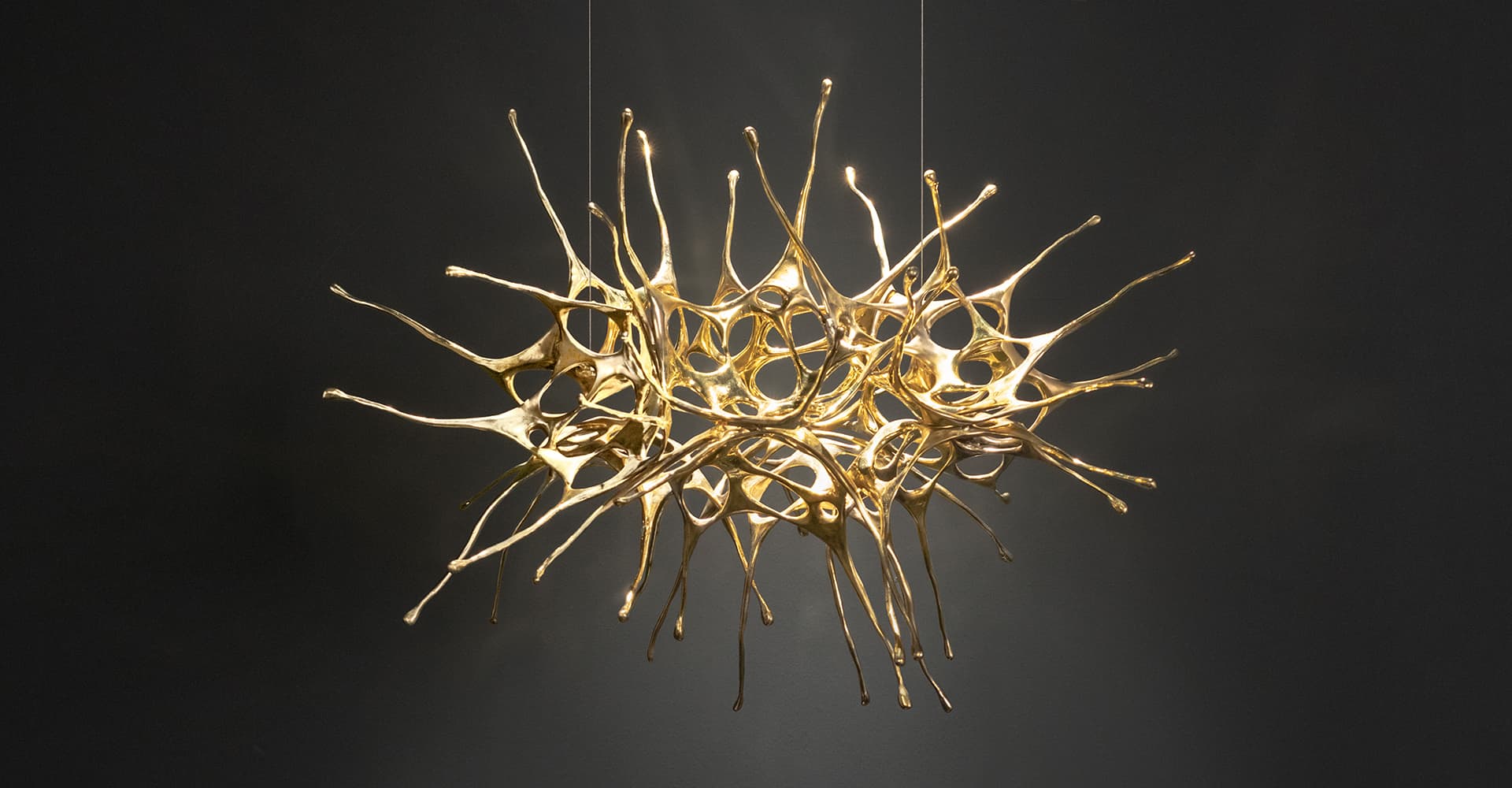
- Sculptural piece: a lamp that is first of all an object, like a sculpture in the space. Its light is soft and usually not enough for reading.
Once you know what the role is, many of the options fall away by themselves.
A floor lamp for reading
Reading needs much more light than conversation or watching TV. The apartment planning guide gives about 300 to 500 lux for a reading corner, and that is light a single ceiling lamp almost never delivers on the page. So a good reading lamp brings the light close, focused, and from the side:
- Position: beside the armchair, so that the light comes over the shoulder and not from behind the head, where it casts a shadow on the page.
- No glare: the light source should be hidden or directed, so that whoever is sitting does not see the bulb itself.
- A moving head or arm: lets you aim the light at the book and not into the eyes of the person opposite.
Examples from the catalogue: Sento lettura by Occhio was designed specifically for reading, with anti-glare optics and a rotating arm in two lengths. Austere by Trizo21 gives light at 2700K with high colour rendering (CRI 93) and dimming on the cable, and on its product page it is also suggested for a reading corner. With 2Thirty, also by Trizo21, you can choose a narrower or wider beam angle (12 or 24 degrees), each head has its own dimming, and in the two-head model each head can be aimed in a different direction. It also comes in a version with an anti-glare grille.
A floor lamp for atmosphere
If the lamp is meant to soften the living room in the evening, how much light it gives matters less than how it spreads it. A few things worth checking:
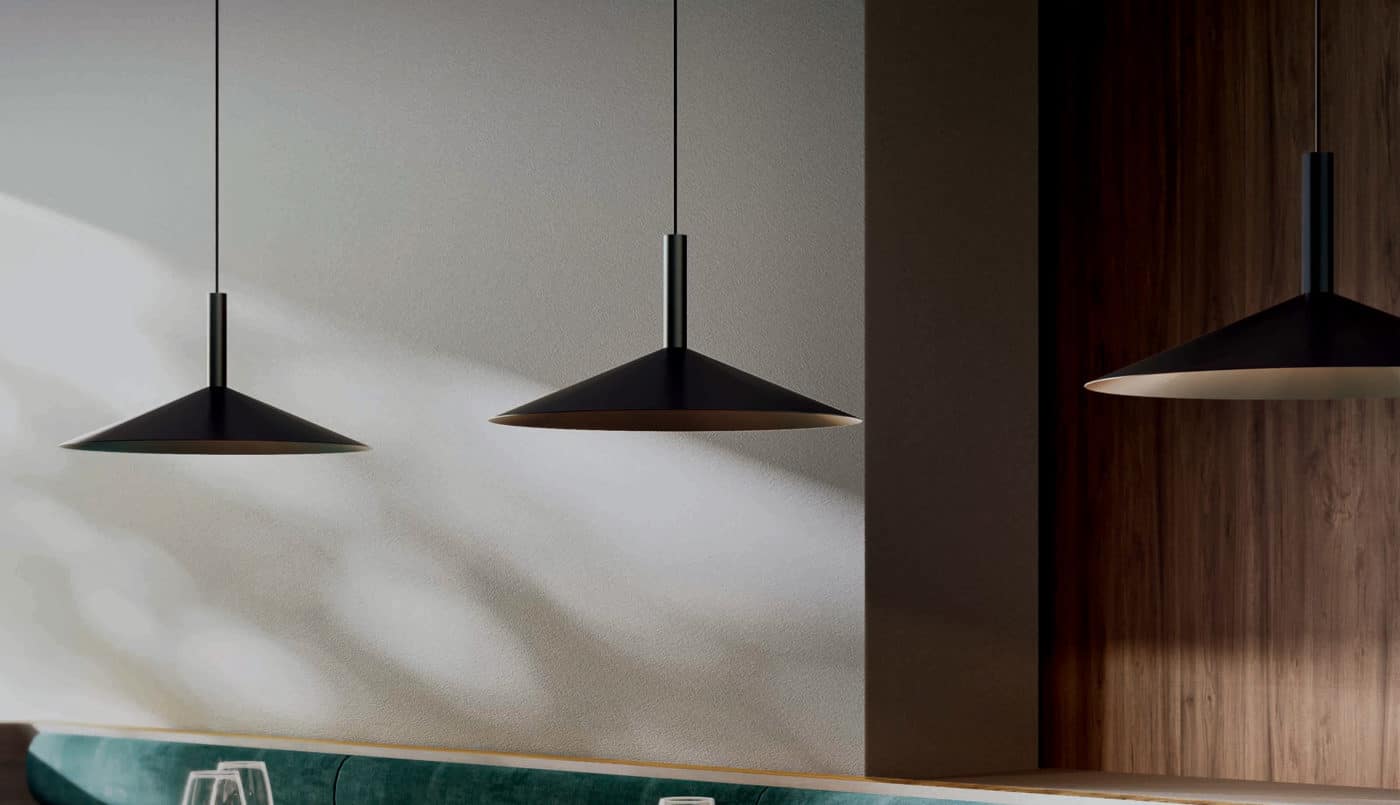
- An opaque shade directs the light down and up, creating “pools” of light on the floor and on the ceiling.
- Glass or fabric glows by itself, and the lamp looks like a soft light source even when you look straight at it.
- Light that rises to the ceiling lights the room indirectly, which is especially suitable for rooms without much ceiling lighting.
Examples: Glo by Penta is a glass sphere that returns the light in reflections between the lamp and the space, about 180 cm tall and with dimming on the cable. The telescopic Mamì, also by Penta, extends from floor to ceiling, with white blown glass in an oval shape. China by Penta, in its floor version, gives soft, pleasant light from a shade about 33 cm in diameter, with dimming on the cable. Beak Floor by Venicem, by contrast, is a slim vertical rod with an adjustable cylinder that projects direct light, so it can be aimed at a wall, a picture or a corner.
The floor lamp as a design piece
Some lamps are bought for their form, and the light is part of the sculpture. They work well in an empty corner, beside a large window or in a double-height space, where a low fixture gets lost. In this case it is worth thinking about the lamp when it is off as well, in daylight, because that is how it is seen most of the time.
Examples: Stream by Terzani, about 175 centimetres tall, is built of stepped layers that cast a quiet, striped shadow across the room. In Doodle by Terzani the line is handmade, and each LED bulb can be placed at any point along it. Sottovento by Catellani & Smith is made of flexible arms that can be turned and shaped, with a floor dimmer. From Tom Dixon there is Melt Floor, about 215 centimetres tall, and Bell Floor in a mirror chrome finish.
And what about an arc lamp?
An arc lamp is a floor lamp whose head stretches far from the base, so that the light reaches the centre of the living room or above a coffee table without a power point in the ceiling. It takes up more space around it, and it needs open space left along the arc. In the catalogue there is Mito largo by Occhio: an arched fixture whose head almost floats above the base, with variable colour temperature and the option to shift the light between up and down.
How to choose: a checklist
Height and proportion
A floor lamp needs to suit the furniture next to it. Next to an armchair, the lamp’s head sits above the eye level of the person sitting, so the bulb does not dazzle. With a high ceiling or in a double-height space, a tall, striking fixture looks better than a slim one that disappears. For every model in the catalogue, the dimensions are given on its product page.
Colour temperature and colour rendering
In the living room, 2700K to 3000K is usually chosen, preferably the same colour temperature as the rest of the lighting in the room. A yellow lamp next to white spotlights looks out of place. Colour rendering of CRI 90 and above flatters skin, wood and fabric. Full explanation: Colour temperature and colour rendering.
Dimming
A floor lamp in the living room almost always benefits from dimming: full light for reading, low light for a film. Some lamps have a dimmer on the cable, some have a floor dimmer you press with your foot, like Lederam F0 by Catellani & Smith, which remembers the last light level, and some have dimming built into the fixture itself, like Stream by Terzani. On the differences: LED dimming and drivers.
Replaceable bulb or integrated LED
In a lamp with an ordinary lamp holder (E27 or E14) you can change the bulb and alter the colour temperature. In a lamp with built-in LED the light is designed in advance together with the fixture, and the head can be smaller. Both options are good; it is simply worth knowing what you are buying.
Socket, cable and stability
The lamp needs a socket nearby. When planning the electrics for a new living room, it is worth marking a socket where the lamp will stand, and in a living room where the sofa is in the middle of the room, considering a floor socket. The cable is run along the wall or under the rug, not across a walkway. And in a home with small children or pets, a heavy, wide base matters no less than the design.
Common mistakes
- Relying on one lamp to light the whole living room. It is one layer among several.
- A sculptural lamp instead of a reading lamp. Beautiful, but the book stays in the shade.
- An exposed bulb at eye level of someone sitting on the sofa.
- A different colour temperature from the ceiling lighting, so the corner looks like a patch.
- A cable across the walkway, because a socket was not planned in the right place.
For all models: Floor lamps, and by brand: Penta, Tom Dixon, Terzani and Trizo21. For the rest of the lighting in the living room: Guide to living room lighting design, and for the lamp above the dining table: Modern chandeliers: how to choose.
Questions and answers
Is a floor lamp enough as the only light in the living room?
Usually not. A floor lamp is one layer among several: it gives light for reading or soft light for a corner, but does not light the whole room evenly. In the living room it is combined with general lighting from the ceiling and with other fixtures.
Which floor lamp is suitable for reading?
A lamp with an adjustable head or a shade that directs the light downwards, whose light source is hidden, and that can stand beside the armchair so that the light comes over the shoulder. An arm or a head that moves helps aim the light at the book and not at the eyes.
Which colour temperature to choose for a floor lamp in the living room?
In most homes, 2700K to 3000K is chosen for the living room. It is worth choosing the same colour temperature as the rest of the lighting in the room, so that the corner does not look too yellow or too white beside it.
What is an arc lamp?
A floor lamp whose head stretches far from the base, so that the light reaches the centre of the living room or above a coffee table without a power point in the ceiling. It needs open space around the arc.
How to hide the cable of a floor lamp?
Place the lamp close to a socket and run the cable along the wall or under the rug, not across a walkway. When planning the electrics for the living room, it is worth marking a socket where the lamp will stand, and if the sofa is in the middle of the room, considering a floor socket.