













At what height to hang a lamp above a dining table and an island, and how to choose its size
The article
In short: over a dining table, hang the bottom of the lamp about 70 to 85 centimetres above the table top. Over a kitchen island, about 75 to 90 centimetres above the worktop. The diameter of a lamp over a table is about half to two thirds of the table’s width, with at least 15 centimetres on each side. In the living room and in passageways, the bottom of the fixture should be at least 2.10 metres from the floor, and a chandelier’s diameter can be estimated as the sum of the room’s length and width in metres multiplied by 8, in centimetres.
This is probably the most common question when buying a pendant lamp, and rightly so: the same fixture can look perfect or out of place just because of ten centimetres of cable. The numbers here are accepted rules of thumb in lighting design. They are a good starting point, and after them it is always worth checking by eye, with the actual lamp or at least with a mock-up of its size.
Above the dining table
Height
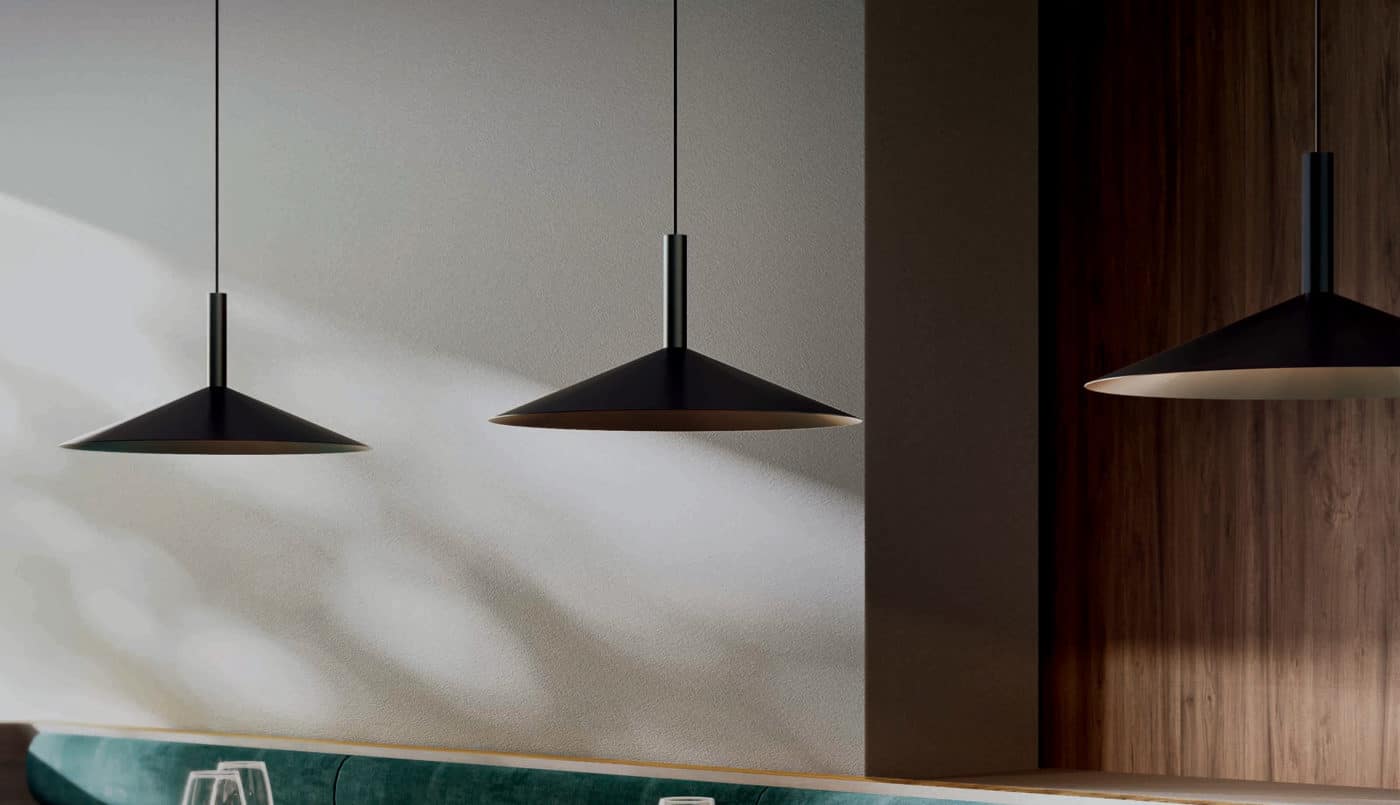
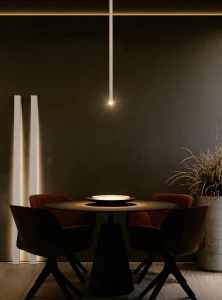
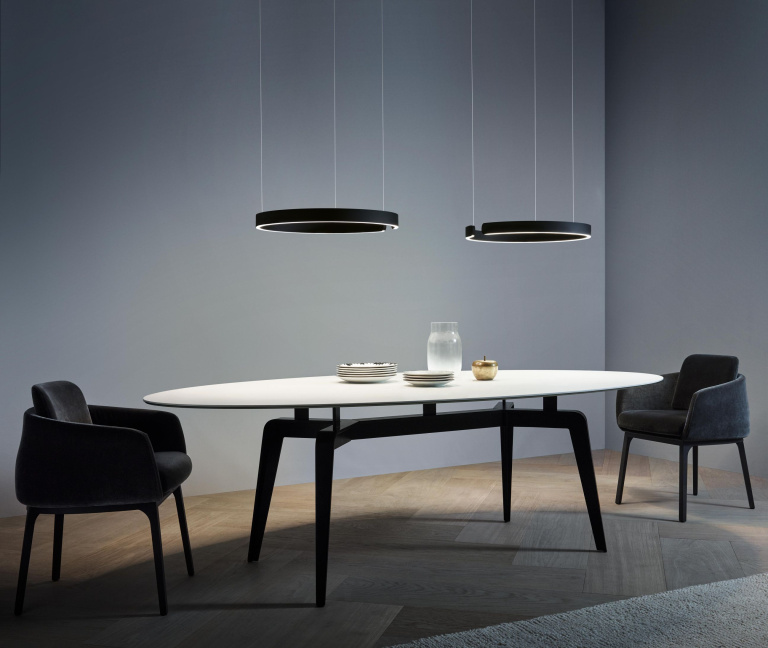
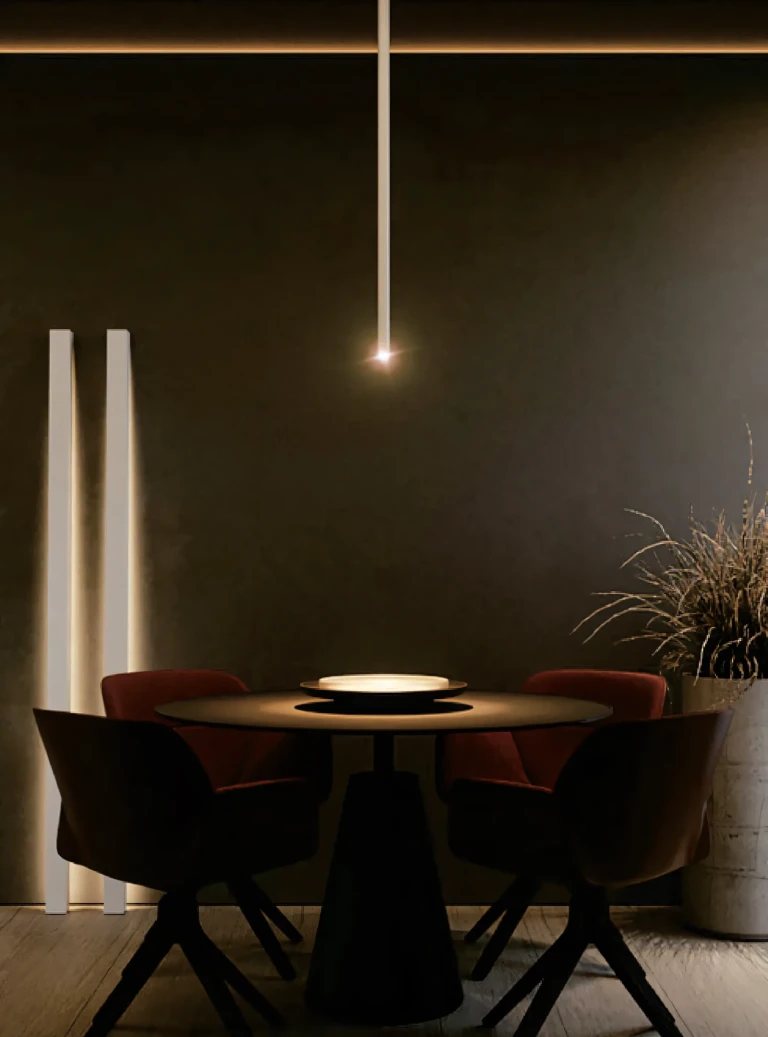
A standard dining table is about 75 cm high. When the bottom of the lamp is 70 to 85 cm above the surface, it is about 1.45 to 1.60 m from the floor. At this height the light is concentrated on the table, the lamp does not hide the faces of the people sitting opposite, and it is close enough to create a “room” around the table even in an open space.
A few adjustments:
- A high ceiling (above about 2.80 metres): the lamp can be raised a little, up to about 90 centimetres above the table, so that it does not look as if it is “falling” from the ceiling.
- A large or opaque fixture: looks heavier, so it feels right slightly higher.
- A transparent or airy fixture (metal mesh, clear glass): can come down lower without feeling heavy.
- Glare: the eye of a seated person is at roughly 1.15 to 1.25 metres, that is, below the bottom of the lamp. If the light source is exposed from below, it will dazzle. A fixture with a diffuser, a shade that hides the bulb, or a recessed light source is better.
Size
The rule of thumb: the diameter of the lamp is half to two thirds of the width of the table, with at least 15 centimetres between the edge of the lamp and the edge of the table on each side, so that nobody bumps into it when getting up.
| Table | One lamp | Several lamps or a linear fixture |
|---|---|---|
| Round, 100 cm diameter | 50 to 65 cm diameter | Not needed |
| Round, 120 to 140 cm diameter | 60 to 90 cm diameter | A cluster of several small fixtures |
| Rectangular, 90 by 180 cm | 45 to 60 cm diameter | Two lamps of 35 to 45 cm, or a linear fixture of about 120 cm |
| Rectangular, 100 by 240 cm | Not enough along the whole length | Two or three lamps, or a linear fixture of 150 to 160 cm |
On a long table, a linear fixture about two thirds the length of the table spreads light more evenly than a single round fixture in the centre. When choosing two or three lamps, divide the length of the table into equal sections and hang a lamp at the centre of each section.
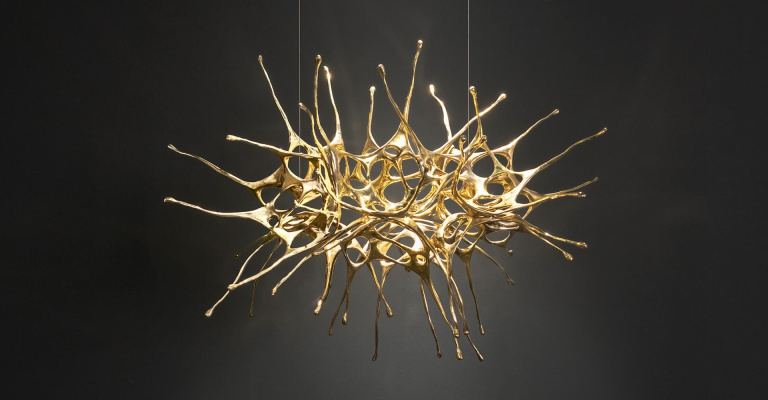
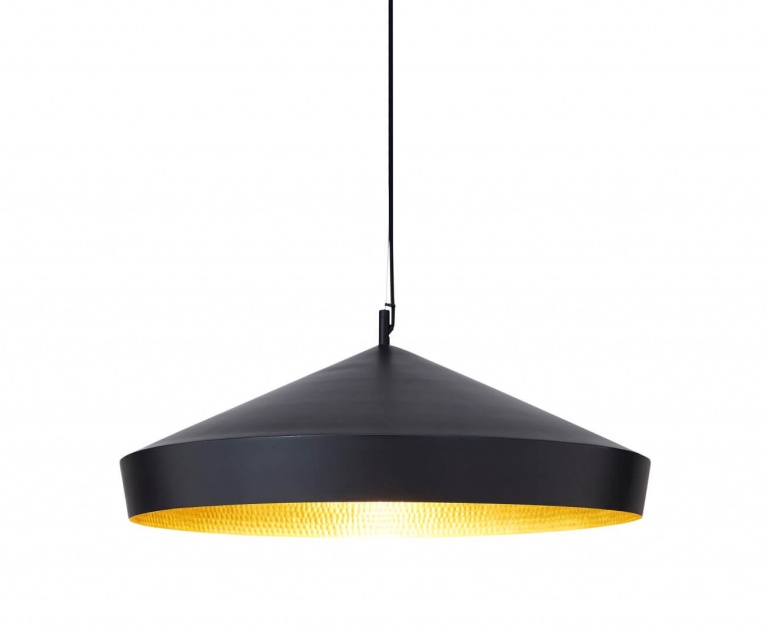
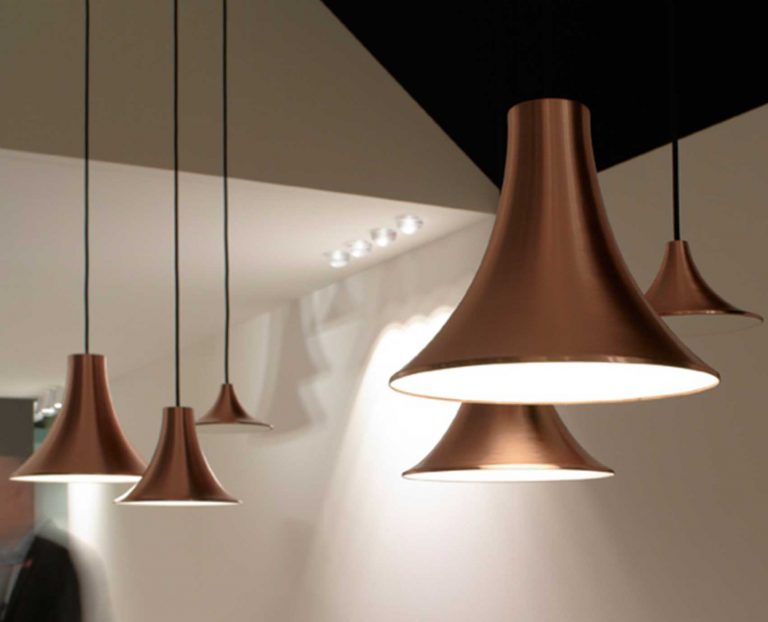
Examples from the catalogue: Mito sospeso by Occhio comes in diameters of 40 and 60 cm; Lederam Manta S1 by Catellani & Smith has a shade about 60 cm in diameter and a 170 cm cable that is cut to size; and the Mamì pendant lamp by Penta comes in several sizes, including a horizontal version. For the full design guide to this space: Dining area lighting.
Above a kitchen island
Height
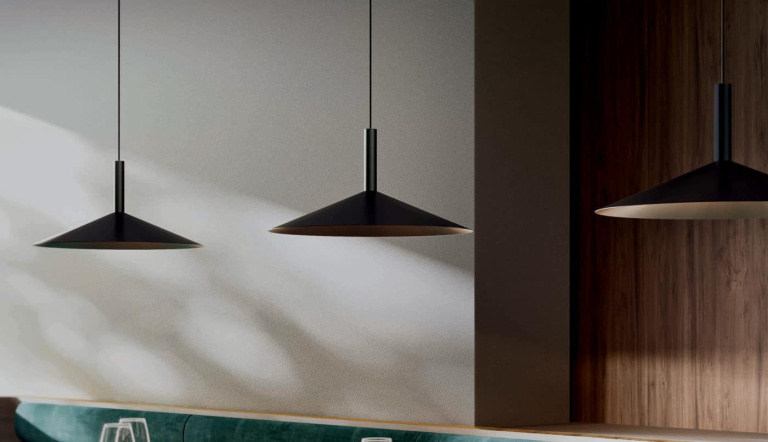
A kitchen island is usually about 90 cm high. It is usual to hang the bottom of the lamps 75 to 90 cm above the worktop, that is, about 1.65 to 1.80 m from the floor. At this height the light reaches the worktop, and anyone standing in the kitchen can still see the living room beneath the lamps. If the members of the household are particularly tall, it is worth checking that the lamps are not exactly at their eye level when they are standing.
How many lamps and at what spacing
- An island of about 1.50 to 1.80 metres: two lamps.
- An island of about 2.40 metres: three lamps, or one linear fixture.
- Spacing between the centres of the lamps: about 60 to 80 centimetres.
- From the end: the outermost lamp should not extend beyond the edge of the island; usually 30 to 45 centimetres from the end to the centre of the lamp.
Lamps above the island are mainly decorative light and light for eating. The worktop itself is best lit also by recessed spotlights or a track, in the same colour temperature. See Kitchen lighting guide and How to choose recessed spotlights.
In the living room, at the entrance and in a double-height space
Height
When the fixture hangs above a place people walk through, the bottom of the fixture should be at least 2.10 metres from the floor. Above a coffee table, with no passage beneath it, it can be hung lower, provided the fixture does not block the television or the view from the seats.
Diameter: the length and width rule
A common rule of thumb for a chandelier or a central fixture in a room: add the length and width of the room in metres and multiply by about 8. The result is the recommended diameter in centimetres.
- A room of 3.5 by 4 metres: 7.5 times 8, about 60 centimetres.
- A room of 4 by 5 metres: 9 times 8, about 70 to 75 centimetres.
- A room of 5 by 6 metres: 11 times 8, about 90 centimetres.
For the height of the fixture itself (from the ceiling to its bottom), an accepted rule is about 20 to 25 percent of the ceiling height: with a ceiling of 2.70 metres, a fixture up to about 55 to 65 centimetres high.
Double-height space and high ceiling
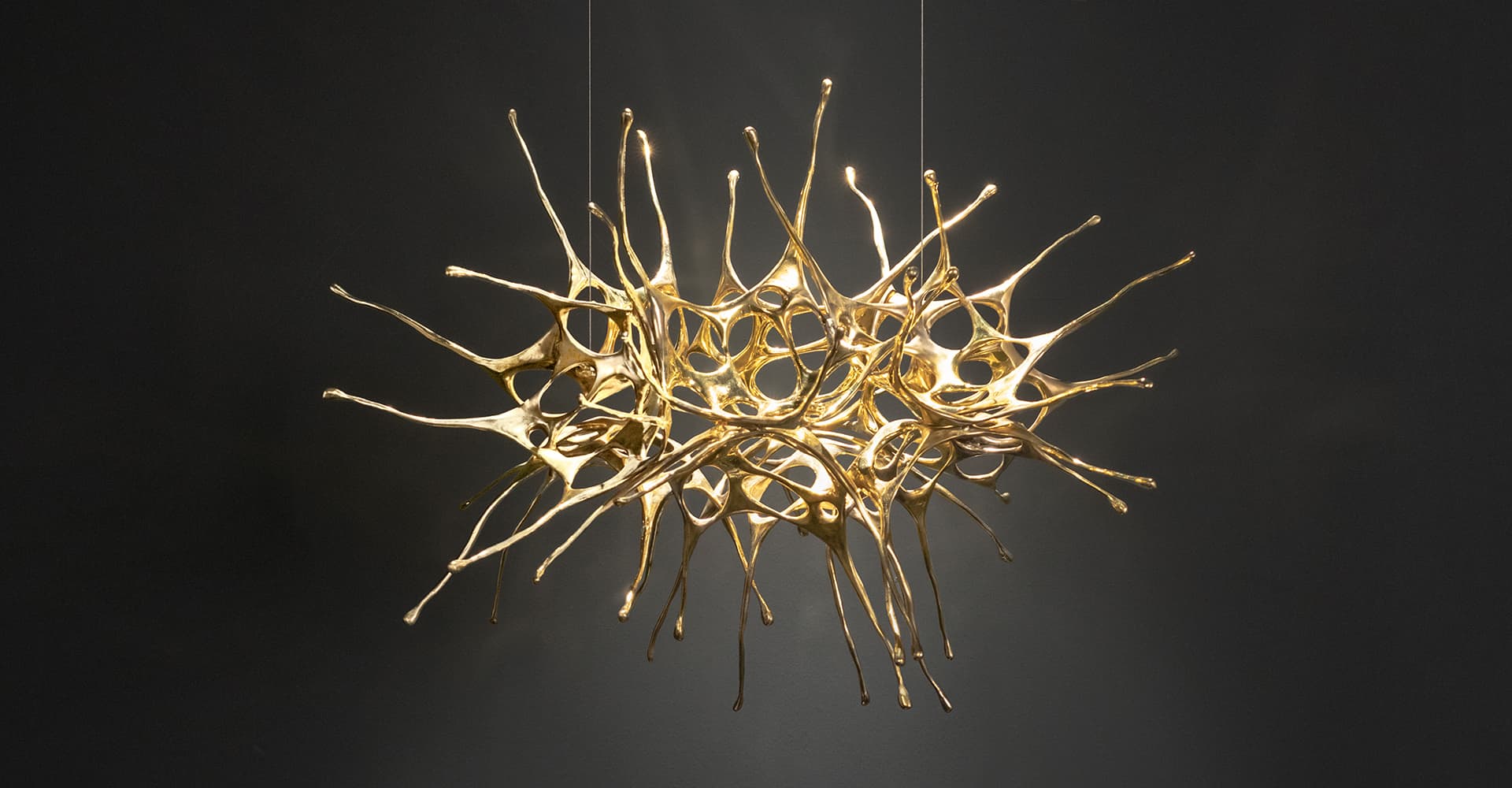
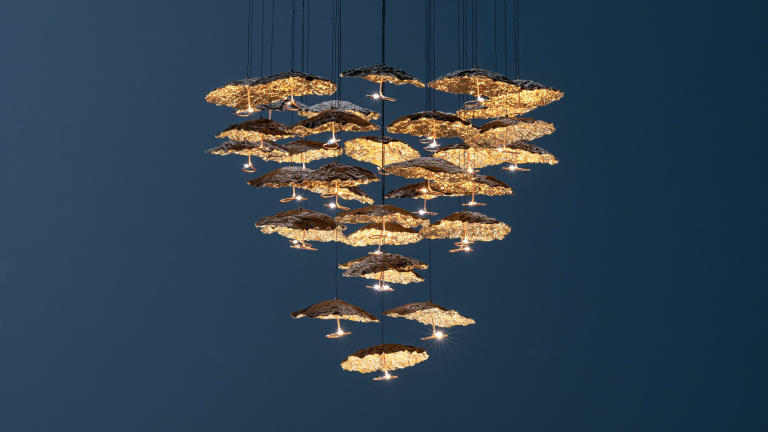
In a double-height space, the fixture has to be larger so as not to be swallowed up by the space, and it is usually hung so that its bottom is roughly at the level of the upper floor, or about 2.50 to 3 m from the floor when it is seen from below. A cluster of several fixtures at different heights, or a large sculptural fixture, fills the volume better than a single small fixture. Large, transparent fixtures such as Fil de Fer by Catellani & Smith, or compositions of several units such as Abacus by Terzani, are examples of fixtures that fill such a volume.
Beside the bed
Pendant lamps instead of night lamps free up the bedside table. Hang them about 50 to 70 cm above the bedside table, or at the height where the light falls on the book when you sit up in bed, and not at the eye level of someone lying down. Full guide: Bedroom lighting.
Common mistakes
- A lamp too small for a large table. A 30-centimetre fixture above a 2.40-metre table looks lost, and lights only the middle of the table.
- Hanging too high. A lamp whose bottom is 1.10 metres above the table no longer belongs to it; the light spreads, and the space looks empty.
- Identical lamps unevenly spaced above an island, because the electrical points were installed before the fixtures were chosen.
- Forgetting the living room. In an open space, a lamp above the dining table is also seen from the sofa. It is worth checking that it does not block the television or the window.
- A different colour temperature from the ceiling spotlights. A 2700K lamp next to 4000K spotlights will look yellow, and the spotlights will look blue.
Installation tips
- Measure before cutting a cable. Many fixtures come with a long cable that is cut on site. It is worth having someone hold the fixture at the planned height while everyone sits around the table before deciding.
- Centre on the table, not on the ceiling. If the electrical point is not above the centre of the table, you can use an offset canopy or a hook that diverts the cable, or move the point at the electrical stage.
- Dimming. Above the dining table it is almost essential: full light for the children’s meal, dim light for dinner. See LED dimming and drivers.
- Weight. Large, heavy fixtures, especially of glass or metal, need suitable anchoring in the ceiling, not just in the plasterboard.
For all the lamps: Pendant lamps and chandeliers, and choosing by brand: Penta, Terzani and Tom Dixon. On the brands themselves, see the guide to designer lighting brands.
Questions and answers
At what height to hang a lamp above a dining table?
The bottom of the lamp is usually 70 to 85 cm above the table top, that is about 1.45 to 1.60 m from the floor with a standard table. With a high ceiling it can be raised slightly, and a large or visually heavy fixture can hang slightly higher.
At what height to hang lamps above a kitchen island?
About 75 to 90 centimetres above the island surface. Since an island is usually about 90 centimetres high, the bottom of the lamps will be about 1.65 to 1.80 metres from the floor, so that they do not block the line of sight between the kitchen and the living room.
How many lamps should go above an island?
An island of about 1.80 metres usually suits two lamps, and an island of 2.40 metres three. A spacing of about 60 to 80 centimetres between the centres of the lamps looks balanced. Another option is a single linear fixture about two thirds the length of the island.
Which lamp diameter suits the table?
About half to two thirds of the width of the table, leaving at least 15 centimetres on each side between the edge of the lamp and the edge of the table. A table 90 centimetres wide suits a diameter of about 45 to 60 centimetres.
How to work out the size of a chandelier for the living room?
An accepted rule of thumb: add the length and width of the room in metres, and multiply by about 8. The result is the recommended diameter in centimetres. In a room of 4 by 5 metres this comes to about 70 to 75 centimetres. In a passageway, the bottom of the fixture should be at least 2.10 metres from the floor.