














Wall Washing and Floodlighting (Wall Washer): How to Light a Whole Wall Evenly
The article
In short: wall washing, or wall washer lighting, spreads even light over a whole wall, from ceiling to floor, without the “arcs” of light and shadow that ordinary spotlights leave. In Hebrew it is also called floodlighting, although the same name is also used for outdoor floodlights that light a façade or a garden. It is used to light a wall with artworks, a bookcase or a special material, and to make a room look larger and brighter. The result depends on three things: optics built for the purpose, the right distance from the wall, and even spacing between the fixtures.
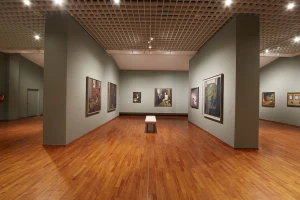
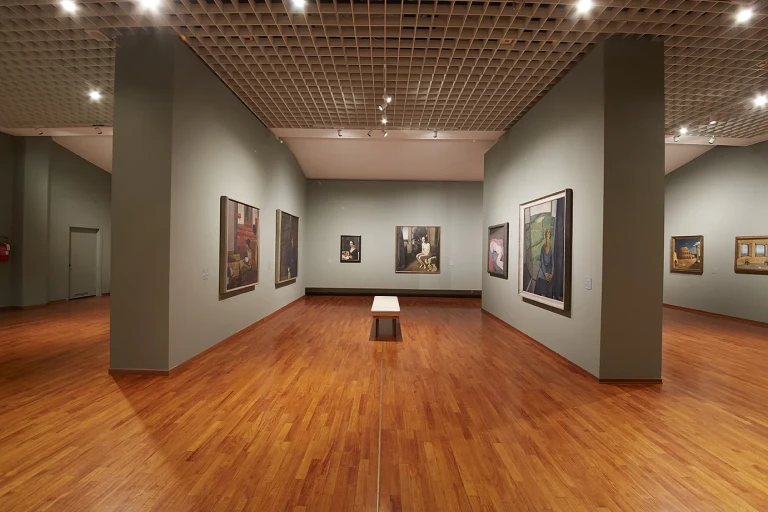
The eye judges a room by what it sees in front of it, that is, by the walls, and less by the floor. So a room whose walls are lit looks brighter, even when the total amount of light is the same. This is the idea behind wall washing, and the reason it is common in galleries, stores, lobbies and homes with a feature wall.
Three ways to light a wall
An ordinary spotlight near the wall casts a round beam on the wall, and a row of spotlights creates a series of arcs of light with dark gaps between them. Sometimes that is the look you want, but it is not even light.
A wall washer is a fixture with asymmetric optics, or a special lens, that directs most of the light onto the wall and spreads it over the full height. Several such fixtures in a row create an evenly lit surface.
Grazing light is light that comes from very close to the wall, almost parallel to it. It does not smooth the wall but the opposite: it brings out every bump and hollow. Suitable for a stone wall, exposed concrete and textured cladding, and not suitable for a plastered wall with flaws.
How to plan wall washing
- Distance from the wall: a common rule of thumb is about a third of the wall height, so in a room with a 2.70-metre ceiling roughly 80 to 90 centimetres from the wall. A fixture that is too close creates a bright patch at the top and a dark wall below.
- Spacing between fixtures: usually about the same as the distance from the wall, so that the beams meet without gaps.
- Ends: the first and last fixtures close to the corners, so that the wall is lit all the way.
- The maker’s data decides: the rules of thumb change with the optics. Check the exact distance and spacing against the photometric data of the chosen fixture.
- Wall finish: a matt, light-coloured wall spreads the light best. A glossy surface or glass will reflect the fixtures.
Wall washer fixtures in the catalogue
Flexalight Lad in a wall washer version
Flexalight’s Lad family comes in a wall washer version for several types of installation, all at 10W. Lad F10 wall washer is an adjustable spotlight for frameless recessed installation (Trimless), which according to the maker comes with CRI 98 and R9 93 colour rendering, with the option of an anti-glare filter. Lad R10 wall washer is designed for semi-recessed installation in a wall or ceiling, and Lad S10 wall washer for surface mounting on a wall or ceiling, at 24V DC. For low-voltage tracks there is Lad T10 wall washer, a module for a 24VDC track, and Lad X10 wall washer; according to the maker, the fixture’s geometry hides the light source and maintains visual comfort. On low-voltage tracks: Magnetic track and standard track.
Flexalight Nap
Nap 10 and Nap 20 are recessed downlights that work as wall washers, with lenses that control the light distribution. Nap 10 is rated at 10W at 250mA, and Nap 20 at 20W at 500mA. These two figures show that the fixtures work with a constant-current driver, which has to be chosen to match (on LED drivers and dimming).
Occhio Mito alto side
Mito alto side by Occhio is a linear fixture that works as a wall washer and gives homogeneous light on the wall. It comes in three lengths, 356, 695 and 1,030 millimetres, with an output of 800 to 2,400 lumens depending on the version, and in four mounting types: surface, semi-recessed, track and trimless recessed. According to the maker, it also supports tuning the colour temperature between 2700K and 4000K, and DALI control.
Grazing light outdoors
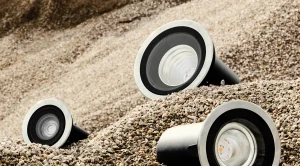
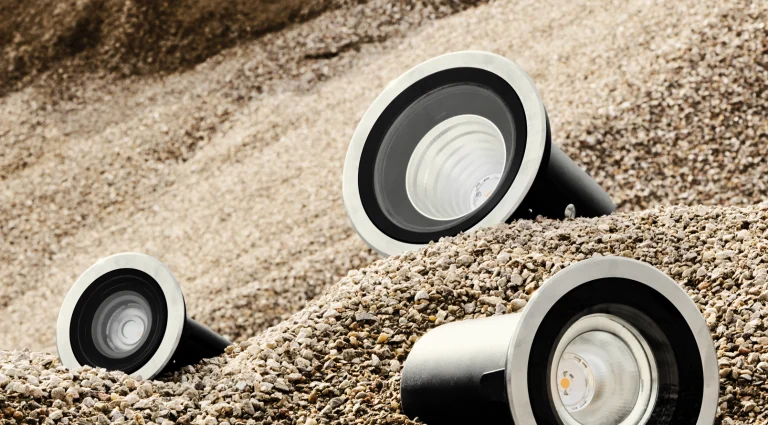
For exterior walls, columns and façades, Miniair and Air 6 by Flexalight are in-ground recessed fixtures with an IP67 rating, designed for grazing light. Both come in a version with an aluminium front that can be walked over, and in an AISI 316L stainless steel version that withstands vehicle traffic.
Floodlighting for the yard and the façade
In the sense of an outdoor floodlight, RAY-30 is a wall-mounted floodlighting fixture: a 30W LED with 1,800 lm, in 3000K or 6000K, with an IP54 rating and a body of aluminium and glass. Outdoors it is worth remembering that light that is too strong and wrongly aimed dazzles the neighbours and anyone passing in the street. More on outdoor lighting: Outdoor and garden lighting: how to choose.
Common mistakes
Ordinary spotlights instead of a wall washer: they give arcs instead of an even wall. A fixture too close to the wall: a bright patch at the top and a dark wall below. Grazing light on a wall with flaws: every crack and plaster repair will stand out. Different colour temperatures: wall washing in a different colour temperature from the rest of the lighting looks like a stain, so choose the same colour temperature, at home usually 2700K to 3000K (on colour temperature).
For all fixtures: Recessed ceiling light fixtures, Track spotlights and Outdoor lighting. And on lighting in stores and showrooms, where wall washing is a key tool: Lighting for stores and showrooms. And for indirect light hidden in the ceiling or wall: Concealed lighting in plaster and LED profiles.
Questions and answers
What is a wall washer?
A light fixture with optics that direct most of the light onto the wall and spread it over the full height. Several such fixtures in a row create an evenly lit wall, without the scallops of light and shadow that ordinary spotlights leave.
What is the difference between wall washing and grazing light?
Wall washing lights the wall evenly and smooths it. Grazing light comes from very close to the wall, almost parallel to it, and brings out the texture: suited to stone and concrete, less so to plaster with imperfections.
How far from the wall is a wall washer installed?
An accepted rule of thumb is about a third of the wall height, with a spacing between fixtures roughly equal to the distance from the wall. The exact numbers depend on the optics of the fixture, so they are checked against the maker’s data.
What is floodlighting?
In Hebrew the term is used for two things: wall washing inside a building, and outdoor floodlights that light a façade, a yard or an open area. In both cases the aim is to light a large surface broadly and evenly.